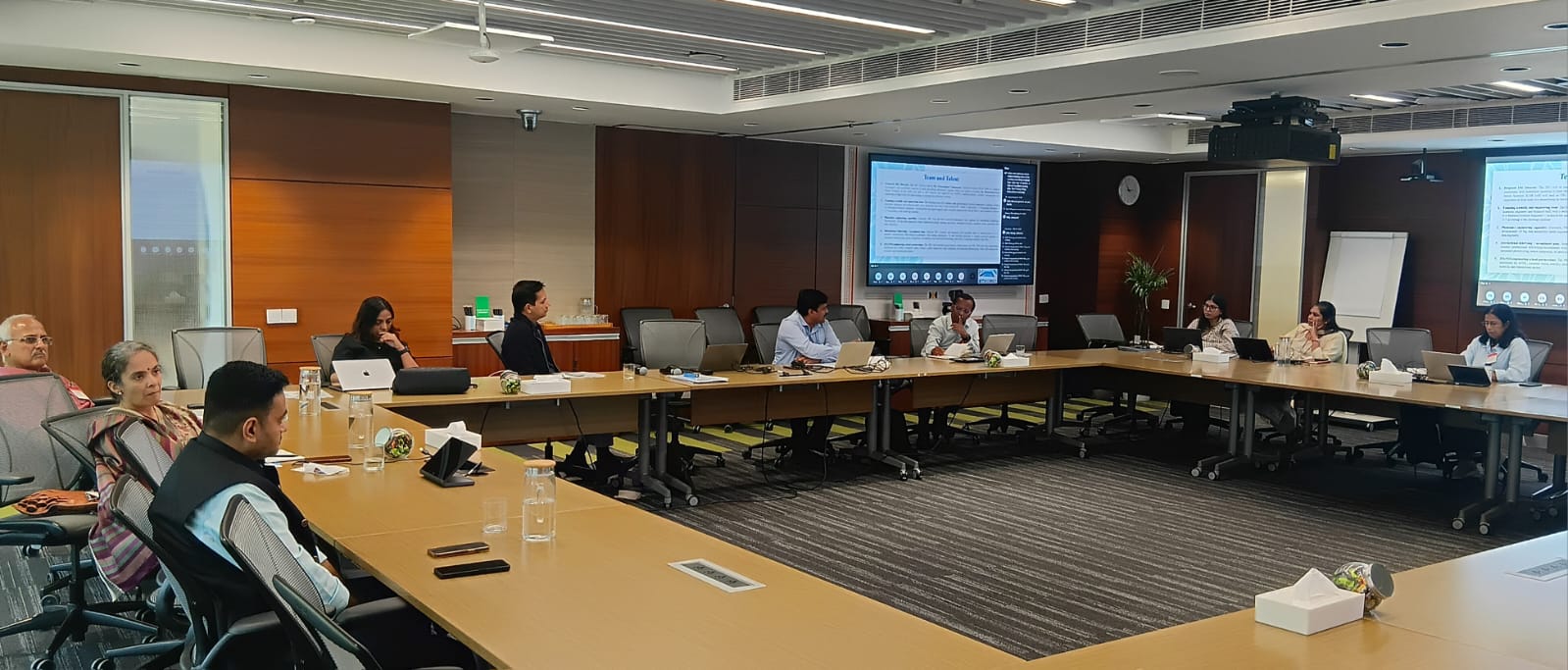
ITRI Facilitated Stakeholder Workshop on Plant Phenomics with the Gates Foundation
August 2026
The India’s Translational Research Initiative (ITRI), in collaboration with the Gates Foundation, recently facilitated a stakeholder workshop on plant phenomics, bringing together experts and institutions from across India’s agricultural research and innovation ecosystem. The workshop focused on exploring the opportunity to build stronger national capabilities in plant phenotyping and to identify the institutional, technological, and ecosystem requirements needed to translate these capabilities into impact.
The discussions brought together stakeholders from academia, government, research institutions, industry, and philanthropy, creating a platform to map existing capabilities, understand gaps, and identify opportunities for greater coordination across the ecosystem. Participants discussed the current state of plant phenomics in India, the infrastructure and expertise that already exists, and the capabilities that need to be strengthened to support research, validation, and deployment at scale.
A key focus of the workshop was the potential role of a Plant Phenomics Translational Research Centre (TRC) in addressing these gaps. Rather than creating a standalone facility in isolation, the discussions explored how a national translational centre could build on and connect existing capabilities, provide access to specialised infrastructure and expertise, and create stronger pathways between research institutions, technology developers, and end users. Such a platform could help accelerate the development and validation of phenotyping technologies and enable their application to challenges across agriculture and crop improvement.
The workshop also highlighted the importance of designing the ecosystem around real-world agricultural needs and adoption pathways. For plant phenomics to deliver meaningful impact, capabilities need to extend beyond technology development to include validation, data generation and analysis, field-level testing, and engagement with researchers and industry that can ultimately deploy these technologies. Strengthening these linkages will be critical to ensuring that investments in phenomics translate into usable capabilities and solutions.
The stakeholder engagement marks an important step in shaping a potential national approach to plant phenomics and understanding how translational infrastructure can strengthen India’s agricultural innovation ecosystem. The inputs from the workshop will help inform the evolving scope, priorities, and operating model for a potential TRC, while ensuring that its development remains responsive to the needs and priorities of the broader ecosystem.
For ITRI, this engagement reflects our broader commitment to building shared translational research capabilities that connect scientific research with application, adoption, and scale. We are grateful to the Gates Foundation and to all the participating institutions and experts for their contributions to the discussion and for helping shape the thinking around a stronger national plant phenomics ecosystem.
As this work progresses, ITRI looks forward to continuing to work with partners across government, academia, industry, and philanthropy to strengthen the institutional and infrastructural foundations required to translate advances in plant science and phenomics into solutions that can ultimately contribute to improved agricultural outcomes.